
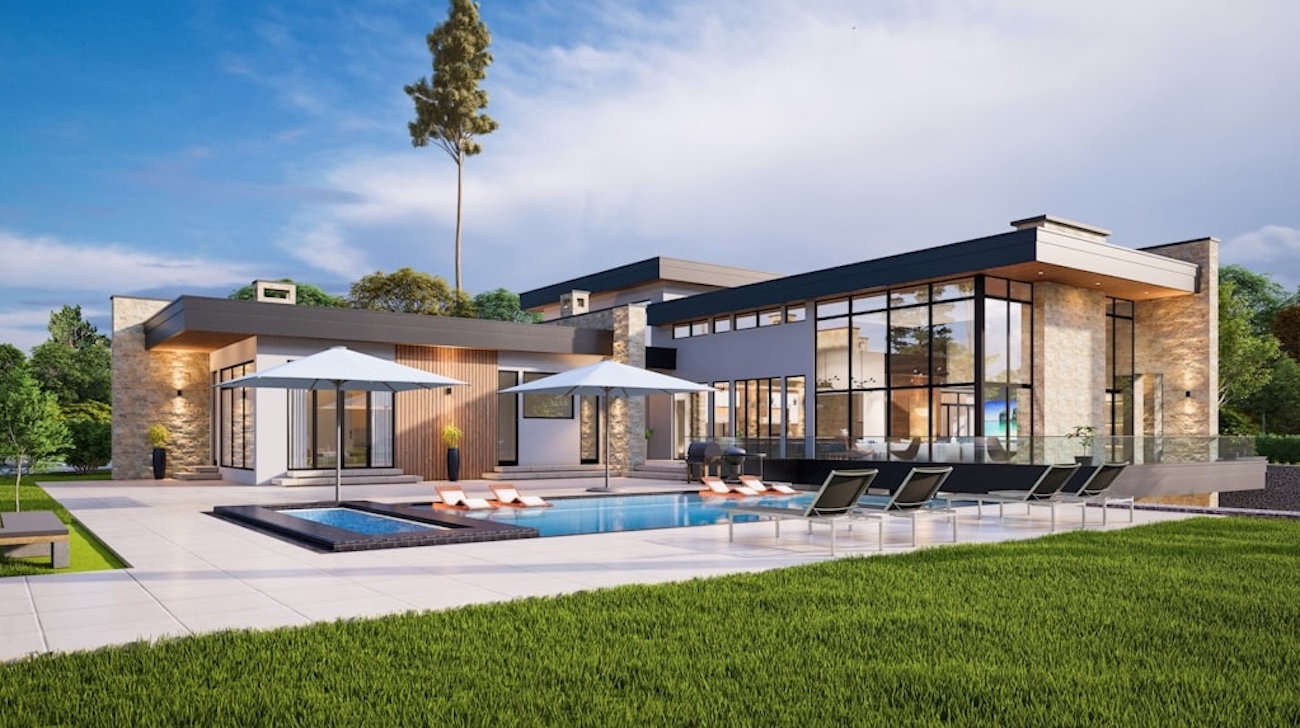
3 Ways Lifestyle Value Is Taking Over the Price Per Square Foot
In times past, the one question that dominated the real estate world had to do with the square footage. The human mind is fascinating in its search for something quantifiable. We often want things sorted through what’s measurable and easy to compare.
Things are changing, and thankfully so. Today, a different idea has taken center stage, one that keeps lifestyle value at the forefront. It has to do with the way a property slides into a buyer’s everyday life. Essentially, luxury homebuyers want the ease of stepping into a space that matches exactly the way they want to live.
What’s a large property without some character or setting, right? Well, this article will shine a light on how the price per square foot is not as relevant now. We will discuss three ways in which lifestyle value is taking the luxury real estate world by storm.
Market Stability Has Become the Starting Point
To understand the precedence of lifestyle value in luxury real estate decisions, we need to go a little further. As a starting point, buyers often look for markets that offer stability and long-term visibility.
That’s because these make lifestyle choices sustainable over time. So, the move towards lifestyle value begins with confidence in the market itself. The Guelph real estate market stands as a relevant example. It is a Canadian regional market that reflects this buyer approach.
As Andra Arnold & Associates notes, Guelph’s housing market appears to be unified at first glance. However, digging deeper shows that real estate activity changes noticeably between neighborhoods, property types, and price ranges.
The variation across market segments is not a sign of inconsistency. In fact, it tells us that the market is actively responding to different types of demand within a well-managed framework. Is it any surprise that in 2024 alone, the city of Guelph had over 6,000 housing units in its short-term supply pipeline?
At the same time, development activity is steadily moving forward. An additional 1,743 units were approved in 2025, representing an increase of 14% year-over-year. Such numbers are proof of a market where growth is managed and supported by infrastructural planning.
Essentially, it shows how buyers evaluate value in the following ways:
- Markets with clear long-term housing strategies are prioritized over cost per square footage.
- Supply pipelines of 1,000+ units reduce uncertainty, thereby assuring stability.
- Municipal planning and infrastructure investment generate confidence that extends beyond pricing metrics.
Even internationally, this acts as a useful reference point. Luxury buyers also often start in structured markets that offer greater predictability. Once that foundation is established, the focus naturally expands toward markets where lifestyle becomes a larger part of the equation.
Buyers Are Prioritizing the Experience a Space Delivers
The limitations of purely financial benchmarks become a lot more glaring once buyers move beyond the price per square foot. Although this may show forth the quantitative value of a space, it cannot capture how the same space would feel or function.
So, size expectations are becoming negotiable as long as a space is able to provide a strong living experience. As per a 2024 report, 80% of prospective homebuyers are flexible with their buying plans. They often explore alternative property types, layouts, and locations to achieve their goals.
The kind of compromise this involves is a clear sign of how experience is replacing the importance of price per square foot. Now, let’s break down what this means in practical terms. These are the areas buyers are prioritizing in terms of experience:
- Views and surroundings, as a comparatively smaller home with an open layout, feel more luxurious than a larger, enclosed property
- Functional outdoor living, which includes terraces, courtyards, and further usable space
- Privacy, which is why low-key environments are being valued over central, crowded locations
- Naturally lit spaces that feel more vibrant and ‘alive’ than constrained layouts
- Homes that support hosting and seasonal living, as they feel more relaxing
In each of these cases, we may observe that buyers are redefining property value. Bland space is not what they want. A property should enhance daily life, both in terms of functionality and aesthetics.
The Demand Leans Towards What Cannot Be Replicated
As we climb up the ladder of the housing market, property value is largely determined by what’s difficult to reproduce. As for the size, well, that is easily comparable. Luxury property buyers are constantly on the lookout for a property that is unique, which means it cannot be recreated elsewhere.
Going by a 2024 report highlighted by CNBC, we see that high net worth individuals (HNWIs) consider lifestyle to be a top priority during the process of property purchase. In spite of investment considerations, buyers are comparing the quality of living, not just the size of a space.
Can the square footage deliver the same value? It’s highly unlikely because it typically treats every unit of space the same. However, let’s do the math quickly. Does 1000 square feet facing a wall mean the same as 1000 square feet with sea views? Not a chance!
Just like this example, let’s look at more of what comes under features that cannot be replicated. Buyers are focusing more on:
- A one-of-a-kind location that adds to the value of the existing square footage
- Irreplaceable features, such as waterfront access and uninterrupted views of the natural world
- Perks that are specific to a particular geography, be it in terms of the climate, walkability, or local culture
- Properties that hold historic value, perhaps because they are tied to a specific time or architectural style that cannot be replicated today
Instead of size, the lens has shifted towards different types of properties that offer unique value. If something cannot be substituted, that’s an instant yes in many luxury buyers’ books.
Real estate has not stopped being an investment for HNWIs. However, what counts as valuable has changed or become more specific.
As per Union Bank of Switzerland’s Global Wealth Report 2024, real estate is still a major component of wealth portfolios. For instance, the Americas are home to nearly 43% of the world’s adults whose wealth exceeds $1 million. Where does a significant chunk of that wealth go? Towards functional and aesthetic luxury properties.
Such properties generally have features to offer that cannot be added later. This means they are built into the property’s setting and design. Naturally, any luxury buyer would be willing to pay more for them per square footage, right?