


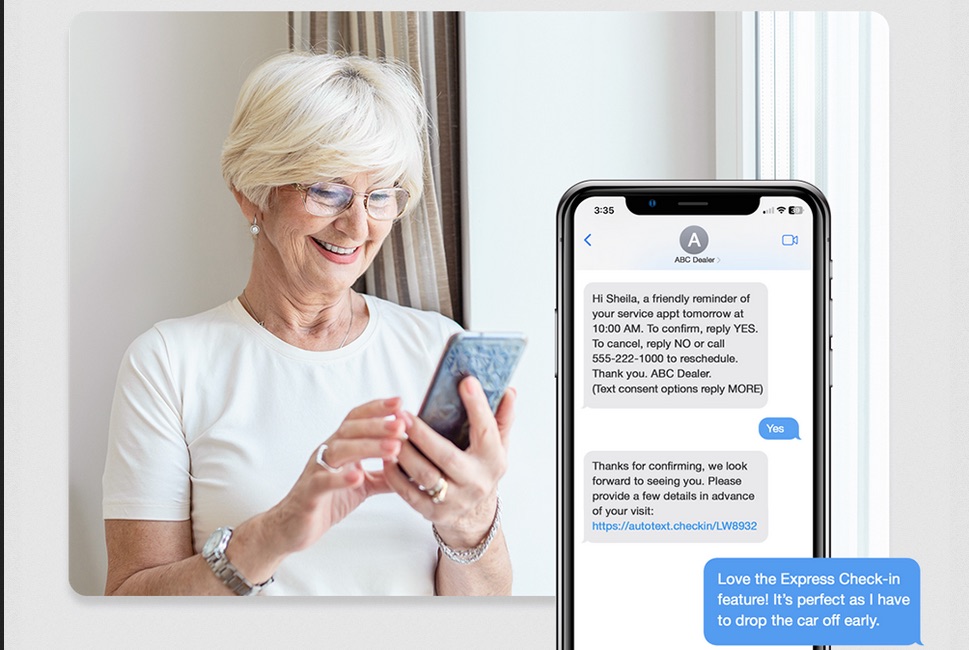
autoTEXT: Texting That Keeps Your Service Lane Moving
If you’ve ever walked into a busy service lane at a dealership, you know the scene: advisors juggling keys, customers checking their phones, technicians moving cars in and out, and someone inevitably asking, “How much longer is it going to take?”
That’s exactly where autoTEXT changes the game.
Instead of bottlenecks at the counter or missed calls back and forth, texting becomes the real-time communication layer that keeps everything flowing. And when it’s done right, it doesn’t just speed things up—it completely reshapes the customer experience.
At VenueVision, we’ve seen dealerships go from “constant follow-ups” to “calm, informed customers” just by tightening up their communication flow.
Why Service Lanes Get Stuck in the First Place
Most delays in the service drive aren’t actually mechanical—they’re communication problems.
Customers are waiting for updates. Advisors are waiting on technicians. Phones are ringing while someone is explaining the same estimate for the third time.
I remember visiting a dealership in Ontario where the advisor literally had sticky notes lined up like a control panel just to track who needed updates. It worked… kind of. But it wasn’t scalable, and it definitely wasn’t fast.
That’s where texting steps in.
autoTEXT Keeps Everyone in Sync
Real-Time Updates Without the Phone Tag
With autoTEXT, advisors can send updates instantly:
- “Your vehicle has moved into diagnostics”
- “We’ve approved your warranty work”
- “Your car is ready for pickup”
No waiting. No voicemail tag. No confusion.
Customers love it because they don’t feel ignored. Advisors love it because they’re not stuck repeating the same status updates all day.
Faster Approvals = Faster Throughput
One of the biggest slowdowns in any service lane is waiting for customer approvals.
Instead of calling and hoping someone picks up, autoTEXT lets advisors send photos, estimates, and approval requests directly to the customer’s phone. Most people respond faster to a text than a call anyway—especially during work hours.
I’ve seen service departments shave hours off turnaround times just by switching approval workflows to text.
Better Experience Without Adding Staff
Here’s the part dealership managers really appreciate: you don’t need more people to handle more volume.
autoTEXT effectively gives your advisors a second screen for communication. They’re still focused on the customer in front of them—but everything else runs in parallel through messaging.
That means:
- Fewer interruptions at the counter
- Less time spent on hold
- More cars moving through the lane
It’s not about replacing people—it’s about removing friction.
Where Digital Tools Fit Into the Bigger Picture
Texting works best when it’s part of a connected ecosystem. For example, pairing autoTEXT with tools like Digital Signage helps reinforce messaging visually in the dealership.
Imagine this:
A customer gets a text saying their car is ready, and at the same time, the service lane display confirms it visually. No confusion, no wandering around asking questions—just a smooth, coordinated experience.
That consistency builds trust faster than any scripted greeting ever could.
A Small Change That Feels Big to Customers
One of the most interesting things we’ve noticed is how customers perceive time differently when they’re informed.
A 90-minute wait with silence feels long.
A 90-minute wait with three helpful updates feels reasonable.
That’s the psychology behind autoTEXT—it doesn’t just move information faster, it changes how time is experienced in the service drive.
Final Thoughts
autoTEXT isn’t about sending messages for the sake of it. It’s about removing uncertainty from the service lane.
When customers know what’s happening, advisors stay focused, and technicians can work without constant interruptions, everything moves more smoothly.
And for dealerships looking to modernize the experience, tools like autoTEXT—combined with connected solutions across VenueVision—help turn a chaotic service drive into a coordinated, predictable workflow.
In the end, it’s simple: better communication equals a faster, calmer, more profitable service lane.